
1. Where Do the Colors Around Us Come From?
Every day, we are surrounded by colors. They appear in the clothes we wear, the bedding we sleep in, and the spaces we call home. Colors have become such a natural part of our lives that we rarely stop to wonder where they come from.
What creates the shades we see every day? How are these colors made? And perhaps more importantly, what exactly is touching our skin for hours, day after day?
These simple questions became the starting point of a meaningful journey for Mimi. A journey that goes beyond color itself and leads us toward a deeper understanding of nature, materials, and the relationship between people and the environment around them.
2. A Love for Natural Materials
From the very beginning, Mimi has always been inspired by the beauty of natural materials. We love the soft beige tone of unbleached cotton. We appreciate the tiny specks that remain on organic fabric, reminding us of its natural origin. We cherish the gentle, authentic feeling that natural fibers bring when they come into contact with the skin.
These qualities may not fit the conventional standards of industrial perfection. They are not always uniform, identical, or flawlessly consistent. Yet they possess something far more meaningful: a sense of honesty and connection to nature.
Working closely with organic cotton and natural textiles taught us an important lesson. Nature does not need to be perfected to be beautiful. Its beauty already exists in its original form.
And that realization led us to another question:
If natural materials can be so beautiful, could color also come from nature in the same way?
3. When Color Becomes More Than Aesthetic
Modern manufacturing has taught us to expect consistency. A shade of blue should always be exactly the same. A shade of pink should never vary. Every product should look identical to the one before it.
Nature, however, follows a different rhythm.
No two leaves are exactly alike. No two tree trunks share the same pattern. No two flowers bloom in precisely the same shade. And no two natural dye batches can ever be reproduced with complete perfection.
The same plant grown in different regions may produce slightly different tones. Seasonal changes can influence pigmentation. Water quality, temperature, processing methods, and even the hands of the artisan all contribute to the final result.
At first, these variations may seem unusual in a world accustomed to uniformity. But the more we learned about natural dyes, the more we realized that these subtle differences are not imperfections—they are what make natural colors truly special. They tell the story of their origin. They carry the signature of nature.
3. The Birth of COOL – Colors Of Organic Life
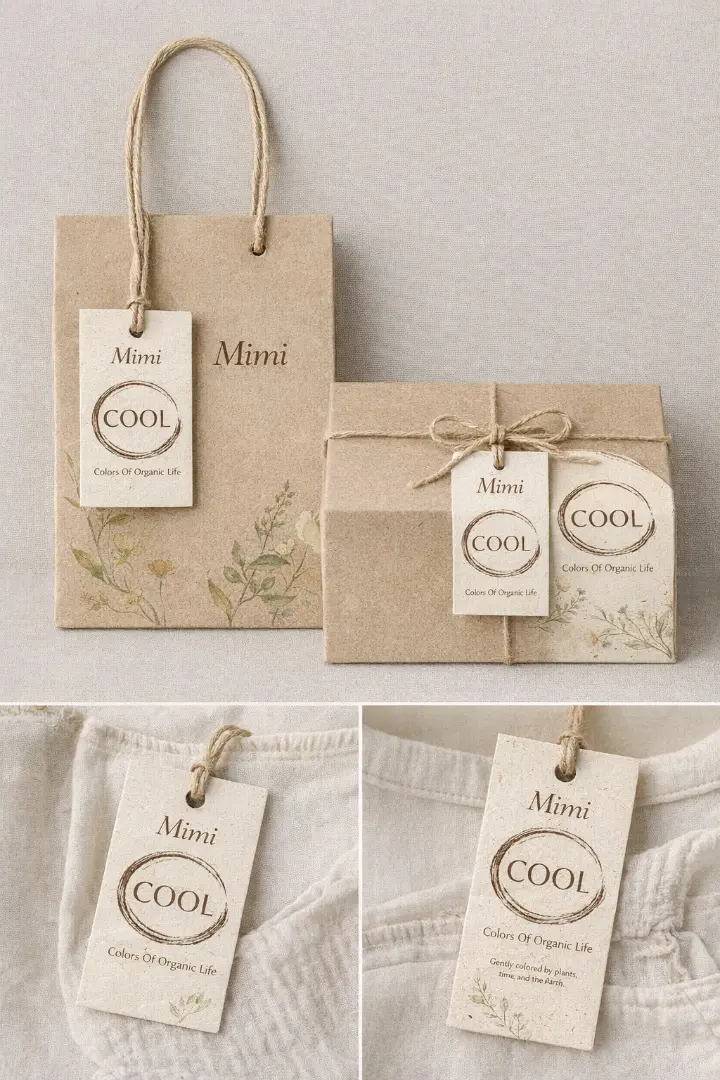
Inspired by this discovery, Colors Of Organic Life, or simply COOL, was born.
COOL is not just a collection of colors. It is an ongoing exploration of how nature creates color and how those colors can become part of modern life in a meaningful way.
Rather than pursuing brightness for the sake of attention, we are drawn to colors that feel calm, balanced, and timeless. Colors that offer depth instead of intensity. Colors that bring a sense of comfort and connection.

Every shade within the COOL journey begins with a story. Sometimes it starts with a plant. Sometimes with a traditional dyeing practice passed down through generations. Sometimes with a material that has quietly existed in nature for centuries. Behind every color lies a unique relationship between people and the natural world.
a. Learning to Appreciate Imperfection
One of the most remarkable aspects of natural dyeing is its ability to embrace variation. In industrial production, differences are often treated as flaws. In nature, differences are evidence of life.
Every naturally dyed product may carry its own subtle tone. Every dye batch may reflect the season, the material, and the conditions under which it was created. These variations are not mistakes—they are characteristics that make each piece unique.
At Mimi, we see this as one of the greatest strengths of natural color.
Choosing naturally dyed products means embracing authenticity. It means appreciating that beauty does not always come from perfect uniformity. Sometimes, beauty emerges from the small details that make each creation distinct. In a world increasingly driven by mass production, these natural differences remind us that individuality still matters.
b. A Different Way of Looking at Color
Today, more people are becoming conscious of how products are made, where materials come from, and how everyday choices impact the environment.
As a result, color is no longer just a design element. Behind every color lies a story about sourcing, craftsmanship, and sustainability. It reflects the materials used, the processes involved, and the relationship between production and the natural world.
Through COOL, Mimi hopes to encourage a different perspective on color—one that values transparency, authenticity, and respect for nature. A perspective where variation is celebrated. Where materials are understood rather than hidden.
And where nature does not need to imitate machines in order to be beautiful.
c. The Journey Continues
Colors Of Organic Life is not a destination. It is an ongoing journey of discovery. A journey into natural dyes, organic materials, traditional knowledge, and the countless colors that nature has quietly offered for generations.
Through this journey, Mimi hopes to share more stories behind natural colors, introduce the origins of each shade, and inspire a deeper appreciation for the beauty found in nature.
Because every color has a story. And every story begins with nature.
The COOL Journey: How Mimi Began Exploring the Colors of Nature