
1. We Live in a World of Uniformity
Modern life has made us accustomed to consistency. When we purchase a product, we often expect it to look exactly the same as every other item produced before or after it. A blue shirt bought today should match the same blue shirt produced months later. A beige bedding set should have precisely the same shade regardless of where it is sold.
Uniformity has become a defining characteristic of modern manufacturing. Through advanced technology, nearly every aspect of production can be controlled, measured, and replicated.
But when we step into the world of natural materials and natural dyes, we discover something different. Nature does not work that way. Nature was never designed to repeat itself perfectly. And that is precisely what makes it beautiful.
2. No Two Leaves Are Exactly Alike
Take a moment to observe nature closely.
Hundreds of leaves may grow on the same tree, yet no two leaves are completely identical. Some are darker, some are lighter. Some are larger, while others are smaller. Even the veins that run through each leaf create unique patterns.
The same is true for flowers, wood grains, stones, and every material nature creates. This diversity is not a flaw. It is evidence of life itself.
Nature constantly changes with the seasons, weather conditions, water sources, and growing environments. Expecting everything in nature to be identical would go against its very essence.
Natural dyes share these same characteristics.
3. What Makes Every Dye Batch Different?
When colors are created from plants and natural materials, the final result is influenced by countless variables.
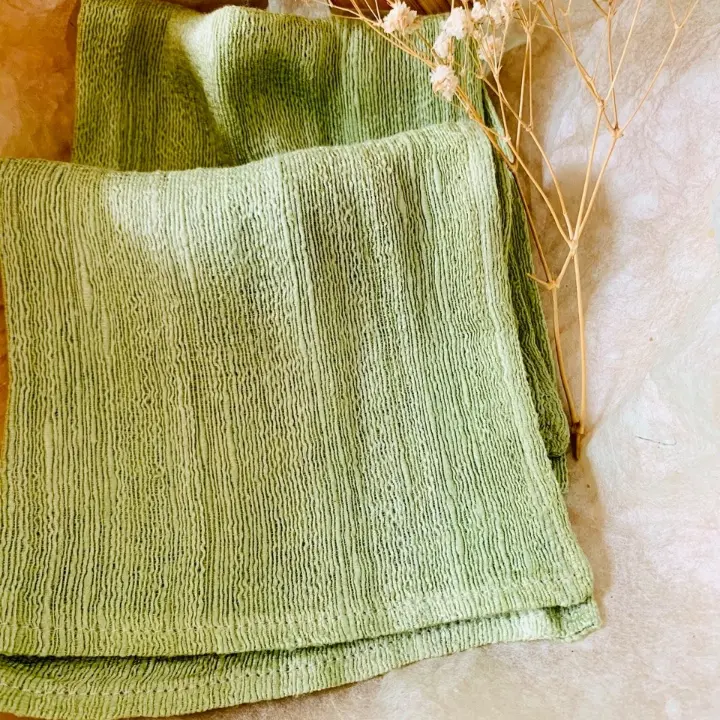
The raw material itself plays a significant role. Indigo leaves harvested in different regions may produce slightly different shades of blue. Madder roots grown under different climate conditions may create subtle variations in red tones. Water quality, dyeing temperature, extraction methods, dye concentration, and processing techniques all contribute to the final color outcome.
Even when artisans follow the same recipe, two natural dye batches may never look exactly the same.
This is not a sign of inconsistency. Rather, it is a reflection of the living materials from which the colors originate.
Every shade carries traces of the season, the environment, and the natural conditions present at the time it was created.
4. The Beauty of Being One of a Kind
For decades, industries have pursued perfect uniformity. Yet as consumers become increasingly interested in sustainability, craftsmanship, and authenticity, our understanding of beauty is beginning to evolve.
Today, many people value uniqueness more than sameness.
A wooden table with distinctive natural grain often feels more meaningful than a perfectly uniform synthetic surface. Handmade objects frequently carry a deeper emotional connection than mass-produced alternatives.
Natural colors embody this same philosophy.
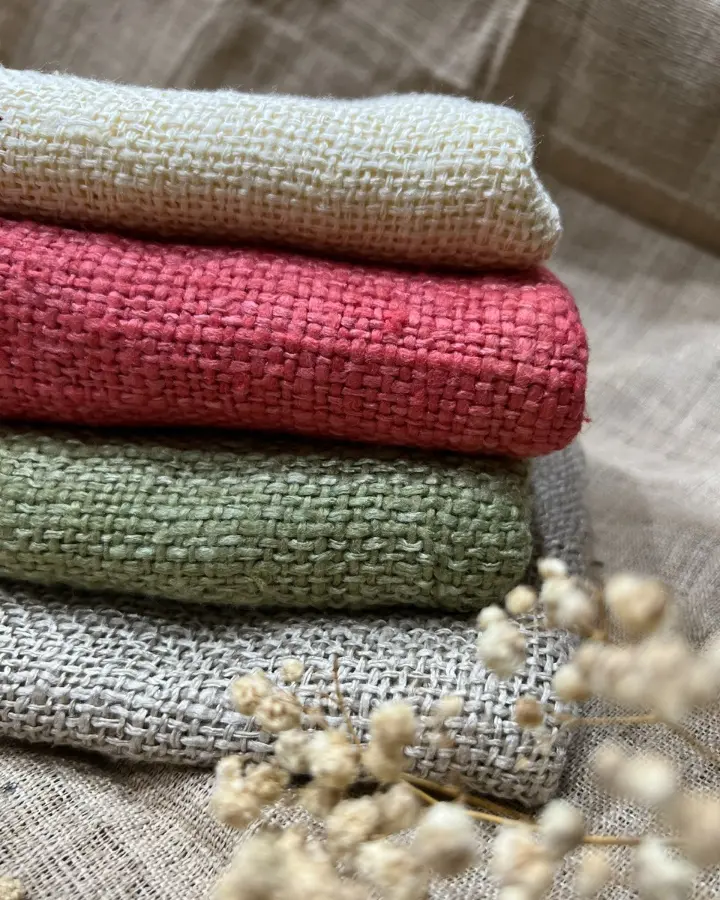
Every naturally dyed product contains subtle variations that make it unique. These small differences give each piece its own identity and character.
Rather than reducing its value, these distinctions become part of its story. They remind us that authenticity cannot be mass-produced.
5. Seeing Imperfection Through a Different Lens
Perhaps one of the greatest lessons nature teaches us is acceptance. Acceptance that not everything needs to be identical. Acceptance that small differences do not diminish value. Acceptance that beauty can exist within imperfection.
When we choose naturally dyed products, we are also choosing a different perspective on the world. A perspective that celebrates diversity, respects natural processes, and recognizes that the most meaningful things are often those that remain true to their origins.
If every leaf looked exactly the same, forests would lose much of their wonder.
And if every natural color were identical, we would lose part of the beauty that nature offers us.
6. Every Color Tells Its Own Story
At Mimi, we do not see natural variations as imperfections to be corrected.
Instead, we see them as a celebration of nature.
Every subtle shift in tone reflects a unique journey. It may be shaped by rainfall or sunshine, by the soil where a plant grew, or by the season in which it was harvested.
Each variation carries a story that cannot be replicated. That is why every naturally dyed product is, in its own way, a one-of-a-kind creation. No two pieces are ever exactly alike. And that is what makes them truly special.
Nature Never Repeats Itself Perfectly: Why Every Natural Color Is One of a Kind