
1. When Color Is More Than Just Color
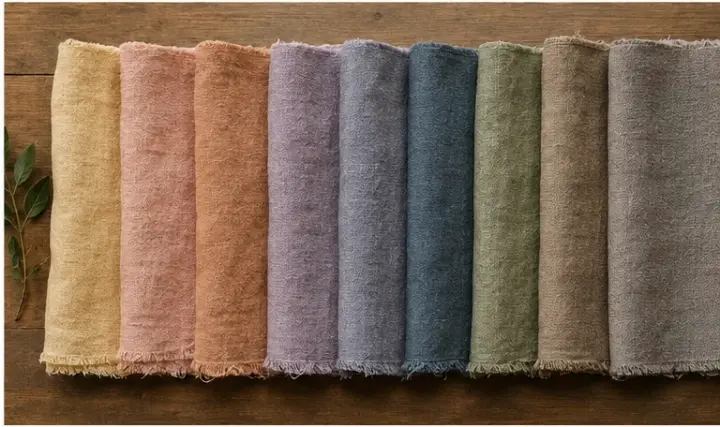
When we admire a deep indigo blue textile, a warm chestnut brown fabric, or a soft red hue derived from plant roots, we often focus only on the beauty of the final color. Yet behind every natural shade lies a far more intricate story—one shaped by raw materials, time, environmental conditions, and a deep understanding of nature itself.
Unlike synthetic dyes, which are created in laboratories through carefully controlled chemical formulas, natural dyes originate from compounds that already exist within plants. These pigments were never designed to serve the textile industry or human aesthetics. Rather, they evolved as part of nature’s own systems, helping plants grow, adapt, and survive in their environments.
For this reason, natural dyeing is not simply the act of transferring color from a plant onto fabric. It is a process of discovering, extracting, and revealing pigments that have long existed within nature. Every shade carries traces of the landscape where its source material grew, the season in which it was harvested, and the hands that guided it through the dyeing process.
2. The Pigments That Have Existed for Millions of Years
Nature is perhaps the greatest color artist the world has ever known. The green of leaves, the red of flowers, the purple of berries, and the golden tones of autumn landscapes all come from naturally occurring pigments that existed long before humans learned how to dye textiles.
One of the most familiar pigments is chlorophyll, the compound responsible for the green color of plants and a crucial component of photosynthesis. Anthocyanins create the vibrant reds, purples, and blue-violet tones found in flowers, fruits, and many vegetables. Flavonoids contribute a range of soft yellow and golden hues, while tannins—naturally present in bark, leaves, seeds, and fruits—are responsible for many of the earthy browns, greys, and blacks commonly seen in traditional natural dyeing.
What makes these pigments particularly fascinating is that they do not exist as ready-made dyes. They must be carefully extracted through processes such as simmering, soaking, fermenting, or aging before they can interact with textile fibers. In many ways, the role of the dyer is not to create color from nothing, but to help reveal colors that nature has already hidden within its materials.
3. From Plant to Pigment: The Journey of a Dye Bath
A natural dye often begins with something remarkably ordinary: a leaf, a root, a seed, a shell, or a piece of bark. Yet transforming these raw materials into lasting color requires patience and a series of carefully managed steps.
After harvesting, materials are cleaned and prepared before entering the extraction stage. Depending on the plant, pigments may be released through boiling, soaking, fermentation, or a combination of techniques. Some dye materials readily give up their color, while others require days—or even weeks—of preparation before they are ready to be used.
Once the dye bath has been created, textile fibers are immersed to absorb the natural pigments. This process is often repeated multiple times to build richness and depth. Unlike industrial dyeing, where results can be achieved quickly and predictably, natural dyeing rewards patience. Each stage contributes to the subtle complexity that makes naturally dyed textiles feel so distinctive and alive.
a. Why Can the Same Plant Produce Different Colors?
One of the most fascinating aspects of natural dyeing is that no two dye batches are ever exactly alike. Even when the same plant material and the same recipe are used, subtle variations in color often appear.
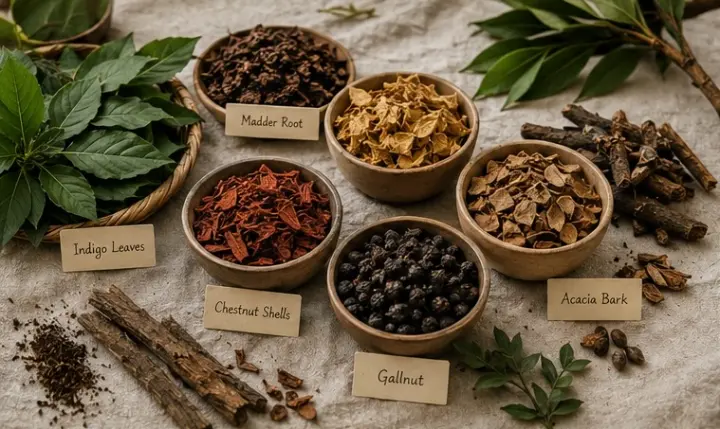
The reason lies in the nature of the materials themselves. No two growing seasons are identical. Rainfall, temperature, sunlight, soil composition, and local climate all influence the concentration of pigments within a plant. As a result, indigo harvested in one region may produce a slightly different blue than indigo grown elsewhere. The same principle applies to madder roots, chestnut shells, acacia bark, and countless other dye materials.
Harvest timing also plays an important role. The maturity of a plant, the season of collection, and even the specific part of the plant being used can influence the final color outcome. These natural variations become part of the story behind each dye batch, making every naturally dyed textile unique.
Rather than viewing these differences as imperfections, many natural dye enthusiasts celebrate them as evidence of authenticity and connection to the natural world.
b. The Role of Water, Temperature, and Time
If plant materials provide the foundation of a natural dye, then water, temperature, and time determine how that color ultimately appears on fabric.
Water serves as far more than a simple medium for extraction. The mineral composition of a water source can significantly affect the brightness, depth, and character of a color. In some cases, the same dye material may produce noticeably different results depending on the water used.
Temperature is equally important. Certain pigments require heat to be released effectively, while others are highly sensitive and can change character if exposed to excessive temperatures for too long. Finding the right balance often requires both technical knowledge and practical experience.
Time also influences the final outcome. Longer dyeing periods can deepen a shade and enhance its complexity, while shorter immersions may produce softer and lighter tones. The interplay between these variables is what makes natural dyeing both a science and an art form.
Success depends not only on following a process but also on observing and responding to the behavior of the materials throughout the journey.
c. Tannin: The Unsung Hero of Natural Dyeing
Among the many compounds used in traditional dyeing, tannin deserves special attention. While it may not be as widely recognized as indigo or anthocyanins, it plays a crucial role in countless natural dyeing traditions around the world.
Tannins occur naturally in many types of bark, leaves, fruits, and seeds. Beyond contributing earthy brown, grey, and black tones, they help improve the bond between pigments and textile fibers. This ability enhances color retention and contributes to the longevity of naturally dyed fabrics.
Materials such as gallnut, myrobalan, and acacia are particularly valued because of their high tannin content. These ingredients have been used for generations to create rich, grounded shades that reflect the colors of soil, wood, and landscape.
Without tannins, many traditional natural dye processes would not achieve the depth, complexity, or durability for which they are known.
4. Where Science and Nature Meet
Natural dyeing is often associated with craftsmanship and tradition, yet beneath its organic beauty lies a remarkable foundation of scientific knowledge. Understanding plant pigments, selecting appropriate materials, controlling environmental conditions, and managing extraction techniques all play important roles in the final result.
What makes natural dyeing truly special is that it exists at the intersection of science and nature. It combines generations of accumulated knowledge with the unpredictable beauty of living materials. Every color is shaped not only by technical decisions but also by seasonal rhythms, environmental influences, and the unique characteristics of each harvest.
Perhaps that is why naturally dyed colors feel so different. They do more than decorate a textile. They tell a story about origin, time, craftsmanship, and our relationship with the natural world.
In every shade, there is evidence of a collaboration between people and nature—a partnership that continues to create beauty in its most authentic form.
What Creates a Natural Dye? Exploring the Science Behind Nature’s Colors