
1. Before Laboratories, Colors Came from Nature
Today, it is difficult to imagine a world without color. The clothes we wear, the bedding we sleep in, and the fabrics that surround us all come in countless shades and tones. Color has become such a familiar part of everyday life that we rarely stop to wonder where it comes from.
Yet if we travel back hundreds—or even thousands—of years, the story of color looks very different.
Long before synthetic dyes were invented, people relied entirely on nature to create color. Leaves, bark, roots, flowers, fruits, clay, and even certain insects were carefully used to produce pigments for textiles and crafts.
Long before synthetic dyes were invented, people relied entirely on nature to create color. Leaves, bark, roots, flowers, fruits, clay, and even certain insects were carefully used to produce pigments for textiles and crafts. From these humble materials, ancient civilizations created vibrant reds, deep blues, warm yellows, and earthy browns that have survived through centuries of history. The textiles discovered in Ancient Egyptian tombs, traditional Japanese kimonos, and handcrafted Middle Eastern carpets all carry the legacy of natural dyeing traditions.
Before color became a product of modern chemistry, it was a gift from nature.
2. What Are Natural Dyes?
Natural dyes are colors derived from naturally occurring materials such as plants, minerals, and certain organic sources.
Unlike synthetic dyes, which are created through chemical processes in laboratories, natural dyes begin with materials that grow, evolve, and exist within nature itself. Indigo leaves produce the iconic deep blue known around the world. Madder roots create beautiful shades of red and pink. Chestnut shells offer warm yellow-brown tones, while mulberry leaves can produce gentle, earthy greens.
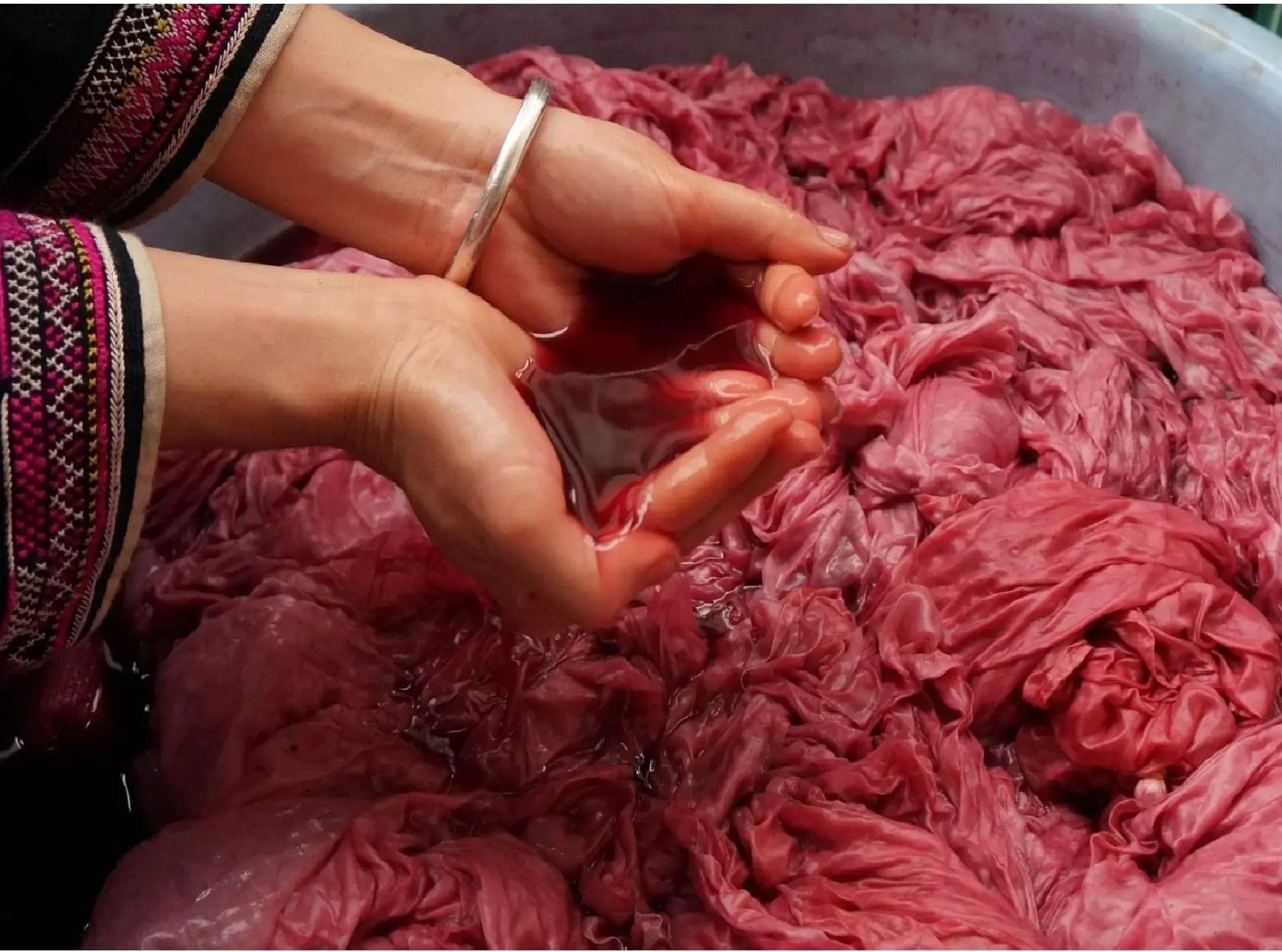
What makes natural dyes particularly fascinating is that color is often hidden within the material. It does not simply sit on the surface waiting to be collected. Instead, the color must be carefully extracted through traditional processes such as boiling, fermenting, soaking, or refining to release the natural pigments contained within the plant.

Every natural dye carries a story. Each color reflects the landscape, climate, and ecosystem where its source material grew.
Perhaps that is why natural dyes feel different. They are not merely colors; they are a connection between people and the natural world.
3. How Does Nature Create Color?
Nature is arguably the greatest color artist of all.
The green found in leaves comes from chlorophyll, the pigment responsible for photosynthesis. Reds and purples in many plants are produced by compounds known as anthocyanins. Yellows often come from carotenoids and flavonoids. Meanwhile, tannins—naturally occurring compounds found in bark, fruits, leaves, and seeds—play a key role in creating many of the earthy browns, greys, and blacks commonly found in traditional dyeing.
Over millions of years, plants developed these pigments for their own survival. Some help absorb sunlight. Others protect against environmental stress or attract pollinators.
Humans did not invent these colors. We simply learned how to discover them, understand them, and work alongside them.
This is why many natural dye artisans describe their craft not as creating color, but as collaborating with nature to reveal it.
4. How Are Natural Dyes Different from Synthetic Dyes?
One of the most common questions people ask is how natural dyes differ from synthetic dyes.
The most obvious difference lies in their origin.
Synthetic dyes are engineered to achieve consistency and predictability. A specific shade produced today can usually be replicated almost exactly years later. This level of precision is highly valuable in large-scale manufacturing.
Trong khi đó, màu nhuộm tự nhiên mang nhiều đặc điểm của chính thiên nhiên. Chúng có chiều sâu, có sự biến thiên và thường tạo cảm giác dịu mắt hơn. Một màu indigo tự nhiên không đơn thuần là màu xanh. Khi nhìn kỹ, người ta có thể cảm nhận được những lớp sắc độ khác nhau bên trong màu sắc ấy. Điều tương tự cũng xảy ra với các gam màu đỏ từ madder, màu nâu từ vỏ hạt dẻ hay màu đen được tạo nên từ các nguyên liệu giàu tannin.
Rather than striving for absolute uniformity, natural dyes celebrate variation and individuality.
5. Why Are Natural Dyes Making a Comeback?
Throughout the twentieth century, synthetic dyes became the dominant choice across the global textile industry. They were efficient, scalable, and capable of producing an almost limitless range of colors.
However, as conversations around sustainability, environmental responsibility, and conscious consumption continue to grow, many people are beginning to reconsider how products are made.
Consumers today are increasingly interested in understanding not only the final product but also its journey. Where did the materials come from? How were they processed? What impact did their production have on the environment?
Within this shift, natural dyes are attracting renewed attention.
Not as a nostalgic return to the past, but as part of a broader movement toward more thoughtful and responsible production.
Around the world, designers, textile makers, and conscious consumers are exploring ways to reconnect with traditional materials and bring nature back into modern life. Natural dyes have become part of that conversation.
6. Every Color Carries a Story
One of the reasons Mimi is drawn to natural dyes is the stories hidden within each color.
A warm yellow-brown may begin with discarded chestnut shells that would otherwise be overlooked after harvest.
A soft red may originate from madder roots, a dye source that has been used for thousands of years across cultures and continents.
The iconic blue of indigo emerges through a remarkable process of fermentation and oxidation, transforming simple green leaves into one of the most celebrated colors in textile history.
Each color has its own journey. No shade appears by accident. No color is simply a number on a design chart.
Behind every tone lies a combination of nature, time, craftsmanship, and generations of accumulated knowledge. Understanding these stories allows us to see color differently—not merely as decoration, but as a reflection of the natural world itself.
7. The Journey of Natural Color Continues
At Mimi, natural dyes represent more than an aesthetic choice. They reflect a philosophy about the relationship between people and nature.
We believe colors can be beautiful without being perfectly uniform. We believe variation is part of beauty, not a flaw. And we believe every shade becomes more meaningful when we understand the story behind it. The journey of natural dyes began thousands of years ago, and it continues today.
Hành trình của màu nhuộm tự nhiên đã bắt đầu từ hàng nghìn năm trước và vẫn đang tiếp tục cho đến ngày nay. Có thể trong tương lai, công nghệ sẽ tạo ra thêm nhiều màu sắc mới. Nhưng những gam màu được sinh ra từ cây cỏ, đất đai và thời gian vẫn sẽ luôn mang một vẻ đẹp rất riêng.
What Are Natural Dyes? The Journey of Color from Nature to Everyday Life